 Conductor
by Devology
Conductor
by Devology
Conductor
by Devology
Conductor
by Devology
Agent Control Plane · Self-hosted
Conductor lets AI coding agents work as teammates inside the tracker you already use. Each task runs in an isolated Kubernetes sandbox with short-lived, scoped credentials — governed, audited, and on your infrastructure.
A guided tour, all real footage: setup in four screens, then a live run — Linear issue in, draft PR out in 15 seconds.
Today, using agents means copy-pasting prompts, babysitting local runs, and handing long-lived credentials to autonomous software. That works for one developer. It does not survive contact with a team.
No new board. No daemons. One rule: when this issue is assigned, this bot works on this repo.
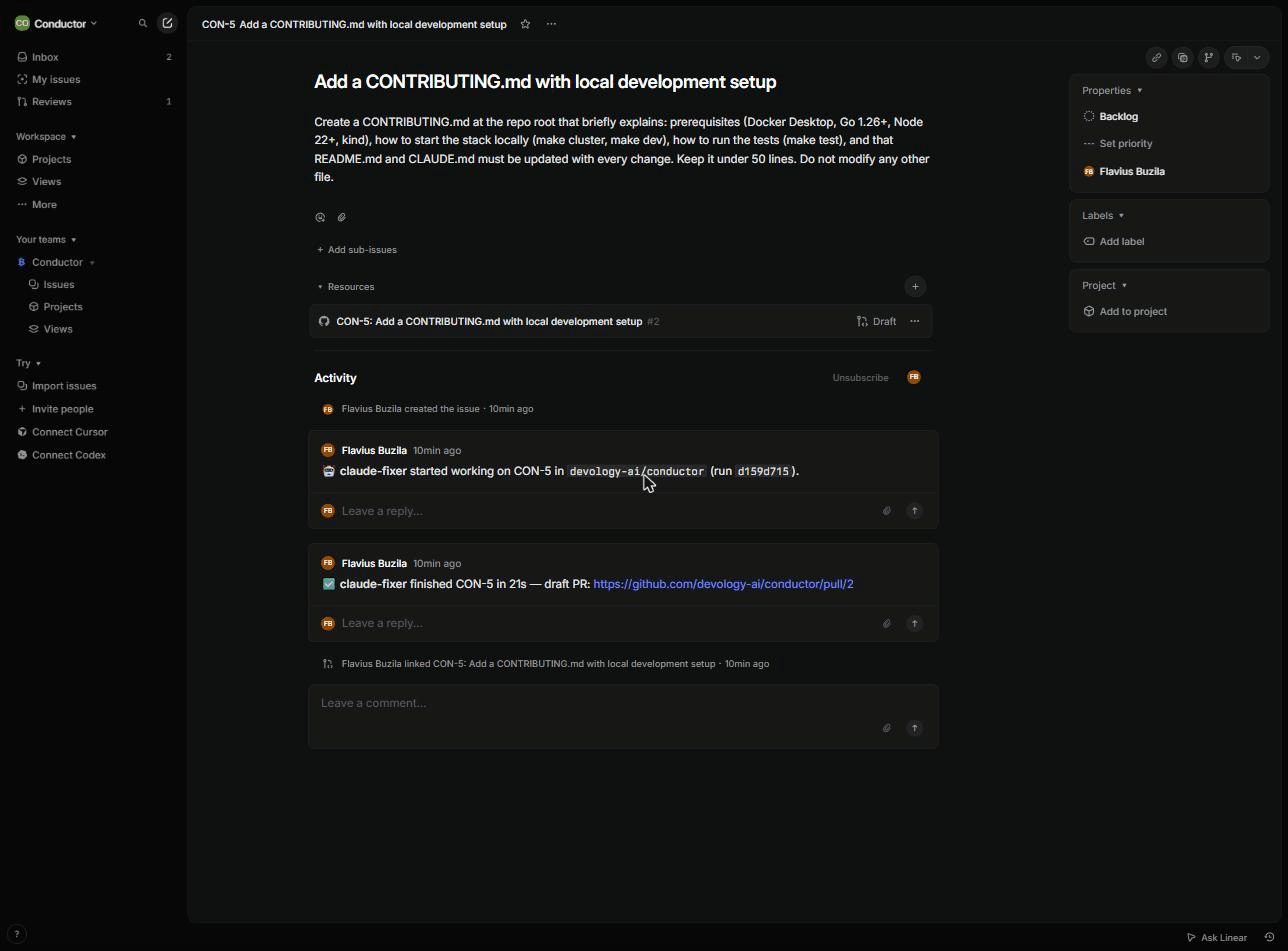
A teammate assigns an issue to the bot — exactly like assigning a person.
A signed webhook hits Conductor; routing rules pick the bot, repo, and limits.
A throwaway Kubernetes pod with hard CPU/memory/time limits — one per run.
Claude Code gets the issue as its task, scoped credentials injected only for this run.
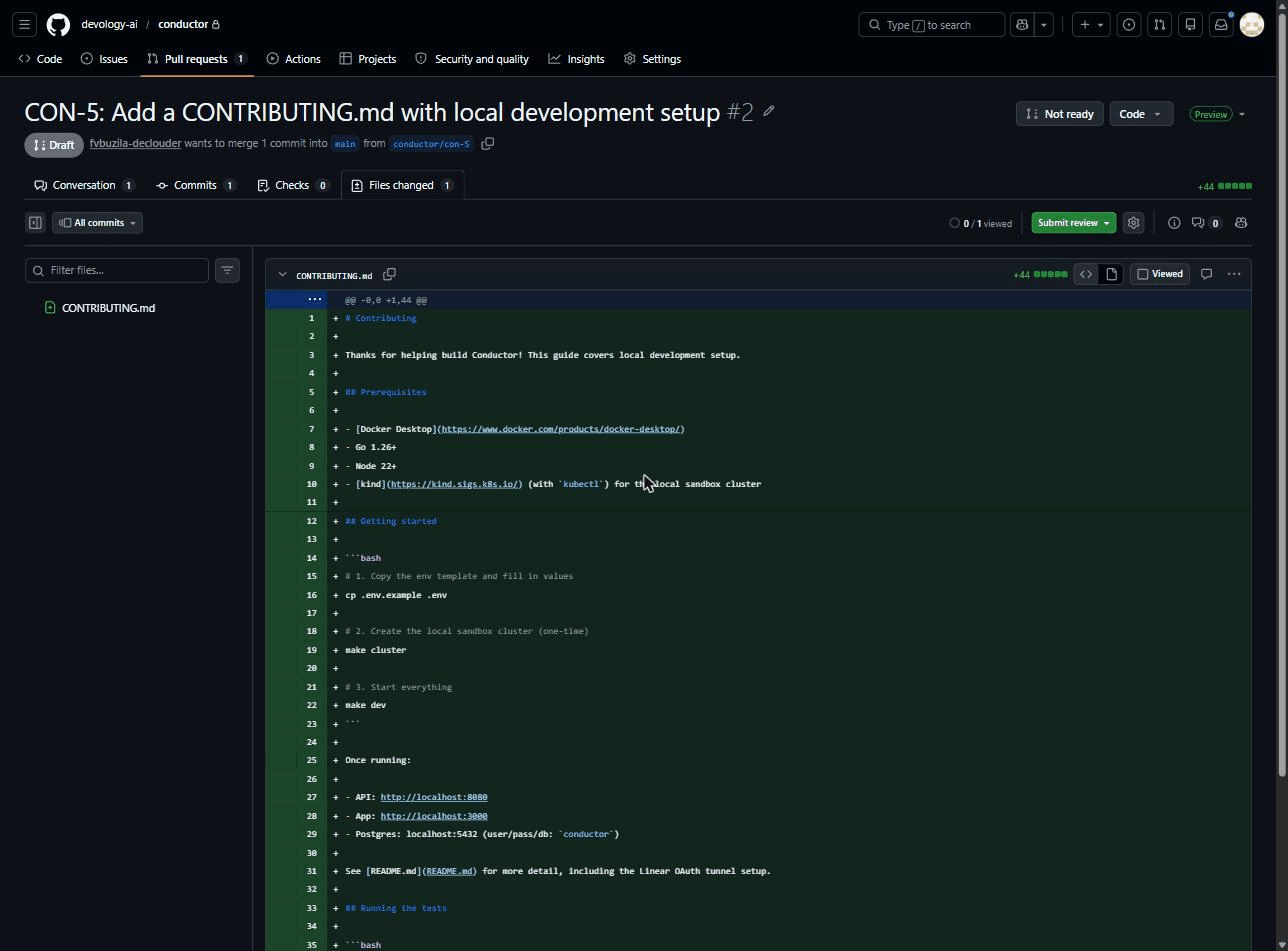
Branch pushed, draft PR opened, the issue gets a comment — sandbox and secrets destroyed.
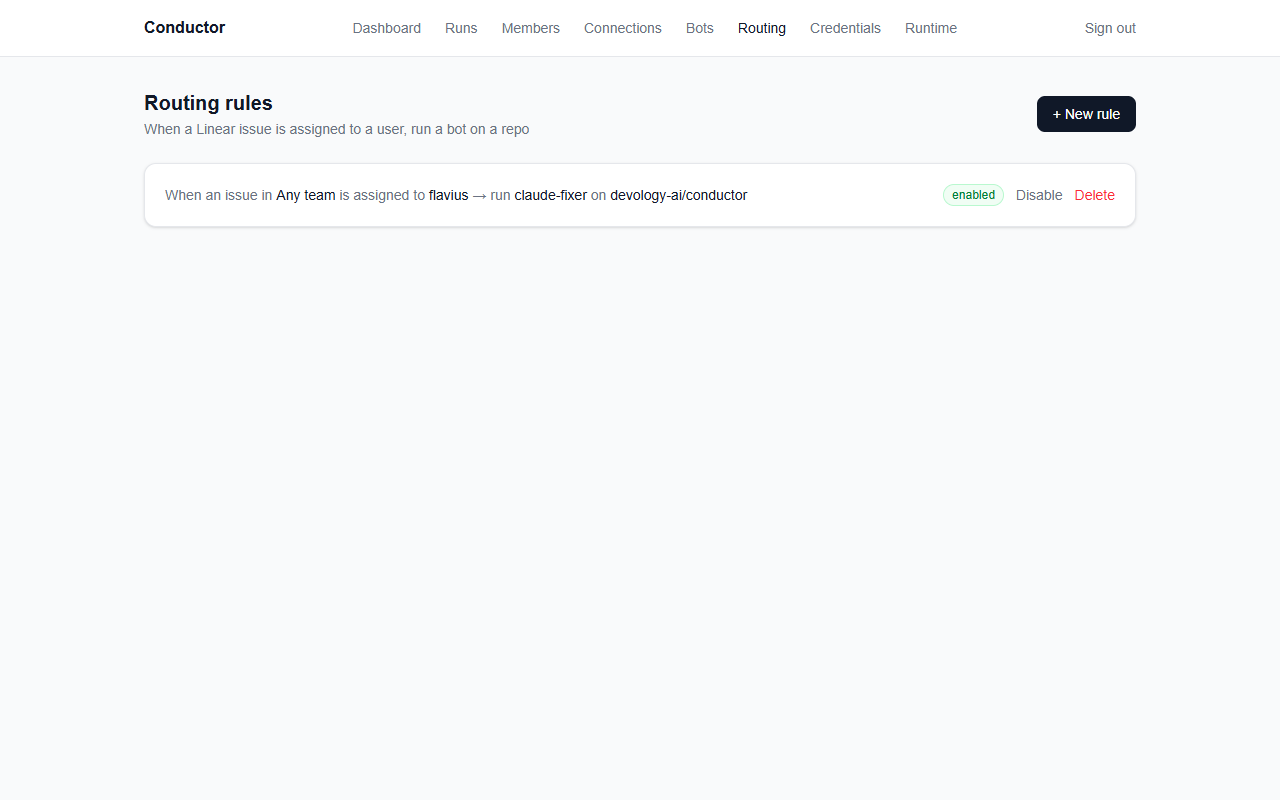
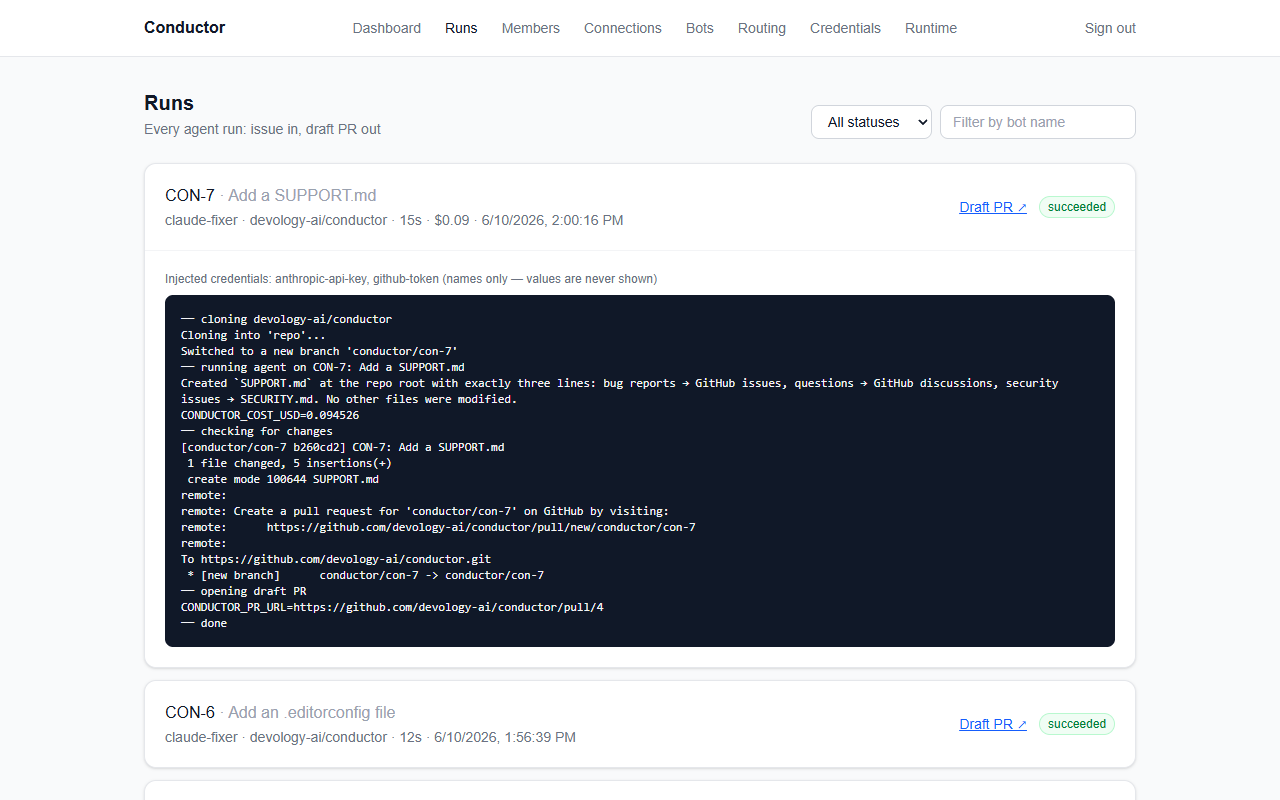
Everything below is from our live system: a real Linear workspace, real sandboxes on Kubernetes, and real pull requests written by the agent.
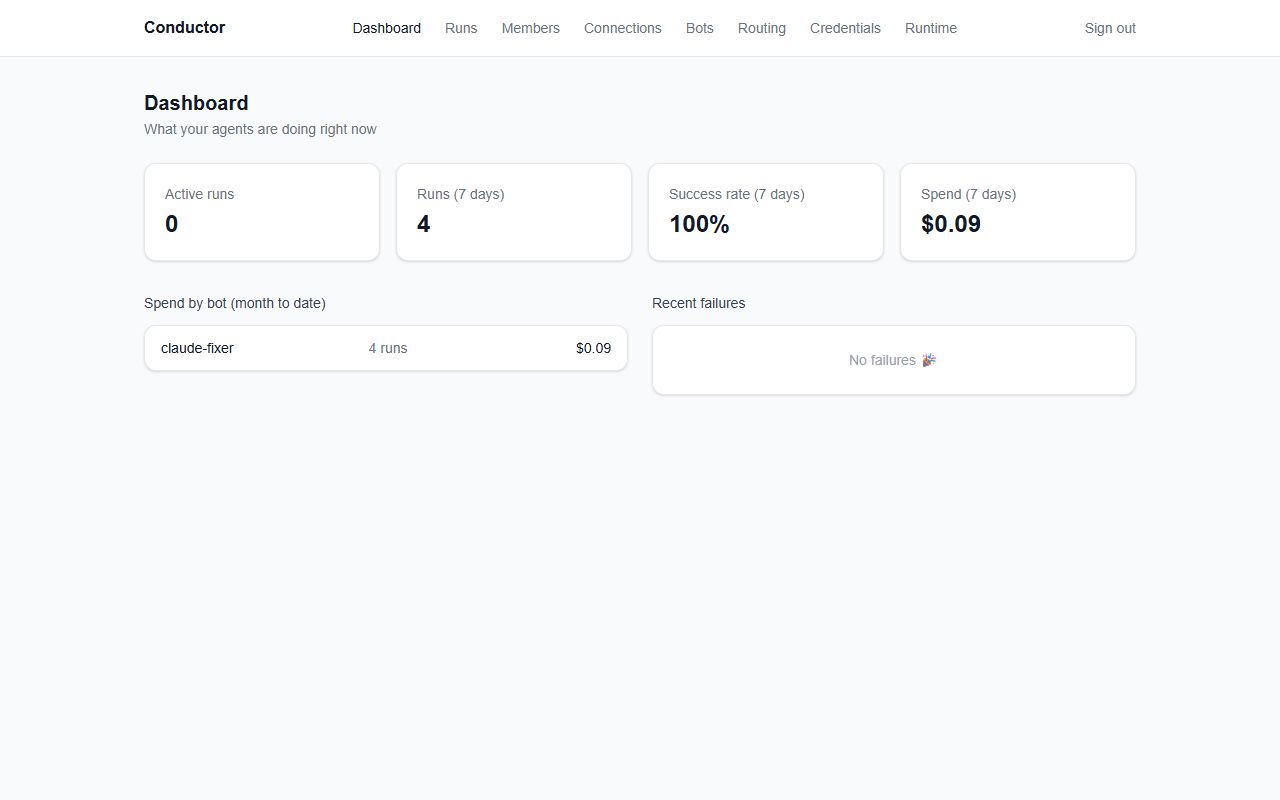
The operator view: active runs, success rate, and exact spend per bot against its monthly cap — with alerts before budgets blow.
No call, no signup. Trigger a real run on our hosted demo and watch an agent turn an issue into a draft pull request in a public repo.
One click creates a real Linear issue assigned to our demo bot. A sandbox spins up, the agent writes the fix and runs the tests, then opens a draft PR in a public repo — usually in 2–3 minutes.
Open the real Conductor console as a read-only guest: live run logs, which credentials were injected (names only — values never leave the vault), success rates, and the exact cost of every run.
Signs you in automatically as a read-only guest — no account needed.
Demo runs use a fixed set of tasks and a capped budget. Want it on your own tracker and repos? Book a live demo.
Letting autonomous agents touch git, registries, and APIs is a credential problem before it's anything else. Conductor was designed around that fact.
A prompt-injected agent can't leak a token it never had. A per-run credential proxy runs beside the agent and injects credentials at the network edge — the agent makes ordinary requests with placeholders, and the proxy swaps in the real secret on the way out. Tokens live in the proxy's memory, never in the agent's environment.
An in-kernel egress funnel locks the agent's only network path to the proxy, so every request is credential-injected and logged — and bypassing it is a network impossibility, not a policy. Closes the exfiltration channel that ephemeral sandboxes and scoped tokens could only shrink.
Values are AES-256-GCM encrypted at rest, never returned by any API, never logged. A single broker component is the only code that can touch them.
Each credential is limited to specific bots and repos — enforced in the backend the moment a run requests it, not hidden in a UI.
Secrets enter the sandbox via a per-run Kubernetes Secret that is destroyed on teardown — destroyed first, even if the pod refuses to die.
Every admin action and every credential injection is logged: which secret, which run, which bot, when.
Issue text is treated as untrusted task content. Permissions and scopes are enforced independently of anything the issue says.
Fully self-hosted — your cluster, your database, your keys. No third party ever holds your credentials. Minimal OAuth scopes (no admin access to your tracker).
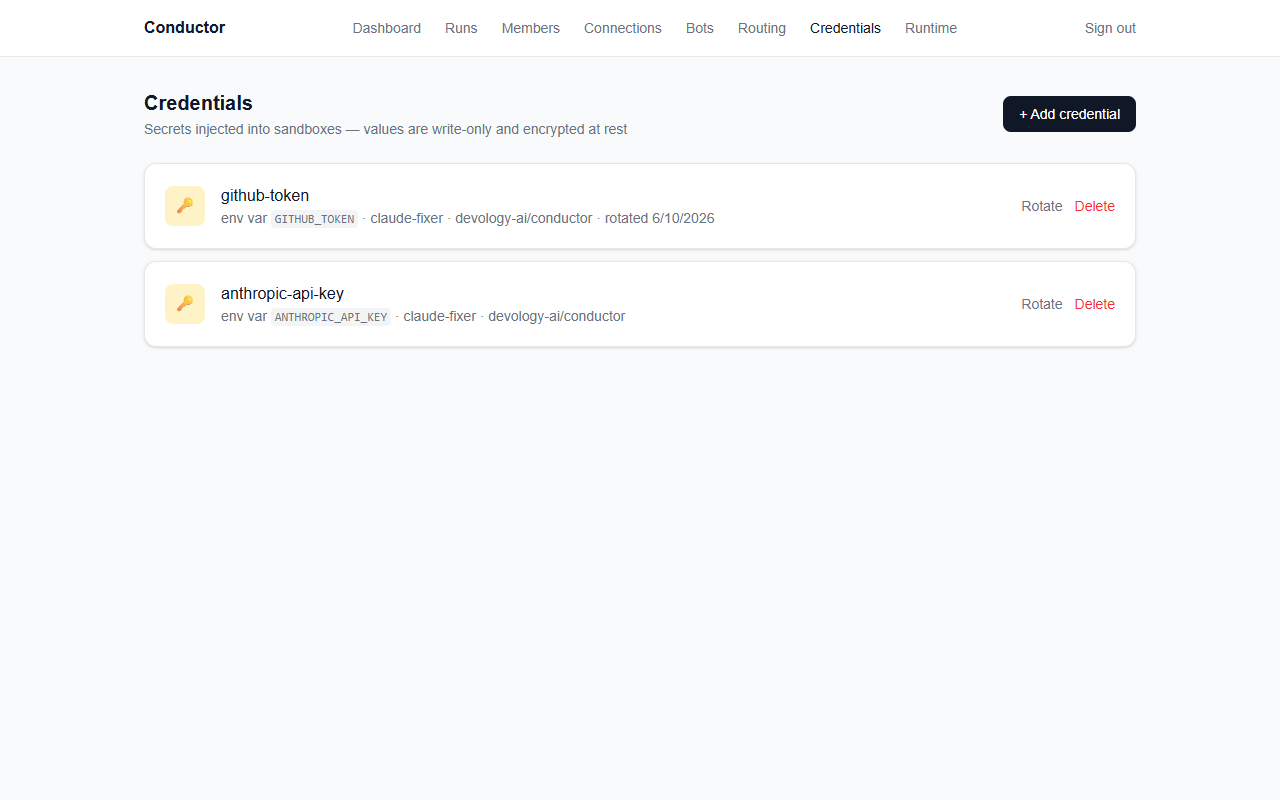
The vault: add once, scope tightly, rotate any time. Values never appear again — anywhere.
A Go control plane, a Next.js console, Postgres, and your Kubernetes cluster.
We're onboarding design partners now. Tell us about your stack — we'll show you a live run on your own issues and help you deploy Conductor on your infrastructure.
Pick a slot that suits you — 30 minutes, we run a real agent on a real issue.
Prefer email? sales@devology.ai